
How to prepare for AP exams without losing the spring
November 5, 2026 · 8 min read
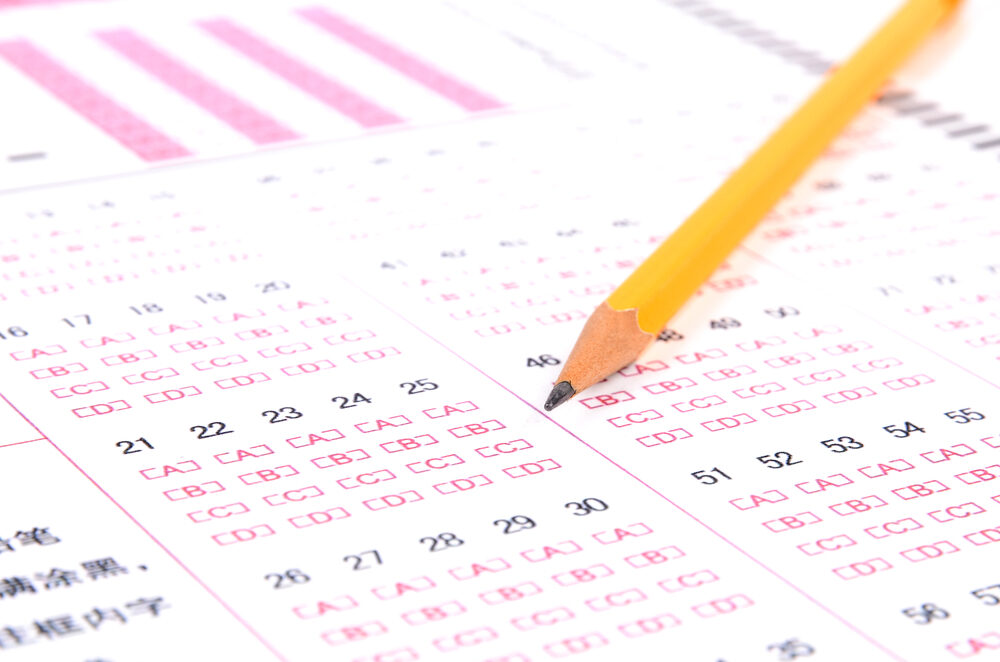
The difficulty with AP exams is not the content. Students have been taught it across the year by teachers who know it well. The difficulty is that the exams arrive in the first half of May, in a compressed window, in the same few weeks as North Carolina's end-of-course exams and whatever else the spring has accumulated — and that most students begin revising about three weeks before.
Three weeks is enough to review. It is not enough to learn anything that was missed in October, which is what most students discover in late April.
Start the real work in January
Not revision — an audit. In January, with four months left, the useful question is not "what do I remember" but "what did I never understand in the first place". Those are different lists, and only one of them can still be fixed comfortably.
Take the course outline and mark each unit honestly as solid, shaky, or never really got it. Students are reasonably good at this when asked directly, and almost never asked. The "never really got it" list is the whole plan: it is short, it is specific, and in January there is time to teach it properly rather than paper over it.
This is also the point at which an AP student can still change the shape of their spring. By April the options have closed.
February and March: content first, past papers second
The temptation is to start on past papers immediately, because they feel like real preparation. Early on they mostly produce discouragement and a list you already had.
Better order: teach the gaps from the January audit, then use past questions to confirm they have closed. A past paper attempted before the content is in place tells you what you already know — that the content is not in place.
Once gaps are closing, past questions become the most valuable tool available, for a reason that has little to do with content. AP exams have strong formal conventions: free-response questions ask for particular things in particular ways, and the rubrics reward specific moves. Students lose a surprising number of marks by knowing the material and answering the question that was not asked.
April: timed practice, which is a separate skill
Knowing the material and producing it under time pressure are different abilities, and the second is trainable. A student who has never written a full free-response section against a clock will discover in May that their first paragraph is leisurely and their last answer is a sentence.
By April the work should mostly be: full sections, properly timed, then a careful review of every lost mark. The review is the part that teaches. A paper taken and filed is a paper wasted.
The last three weeks should get lighter, not heavier
This is the part that runs against instinct, and it is the single most useful piece of advice we give AP students.
By late April, whatever is not known is largely not going to be known. Cramming new content in the final fortnight displaces sleep, raises anxiety, and interferes with retrieving the material that is known — which is where almost all the available marks are.
The final three weeks should be consolidation: light review of strong areas, targeted work on the two or three highest-value weak spots, timed practice, and sleep. Students who taper slightly into the exams routinely outperform students who sprint into them with the same preparation behind them.
The North Carolina collision in May
Worth planning for explicitly, because it catches families every year. North Carolina's end-of-course exams — NC Math 1, NC Math 3, Biology and English II — fall in the same general window, and by state rule an EOC counts for at least 20 per cent of the final course grade. A junior taking two APs alongside NC Math 3 and English II can have four high-stakes assessments inside a fortnight.
Two things help. Map the whole window on one page in January, including any planned SAT date, and move what can be moved — the SAT date, almost always. And decide in advance which two assessments get the student's best effort, because four will not. That decision made deliberately in February is far better than the same decision made by exhaustion in May.
How many APs is the right number
Fewer, done well, beats more, done adequately — on the transcript and for the student. Two AP courses taken seriously, with scores to show for them, read better than four with mixed results, and they leave room for the rest of a life.
If a student is already carrying more than is working, the honest conversation is worth having in the autumn when a change is still possible, not in April when it is not.
Where we fit
We teach AP courses alongside the North Carolina high school sequence at our Apex centre, and most of the AP work we do between January and April is exactly the audit above: finding the units a student never really got, teaching those properly, then moving to timed practice. It is unglamorous and it is where the marks are.
The Apex centre is at 2701 Lawnview Lane, Suite 106, near Beaver Creek. Spring AP places are set in the autumn and the timetable fills early, so January is late to start asking and November is not.
What a realistic week looks like
From January, three to four hours a week per AP course is enough if the hours are used well, and most students do not need more than two courses receiving that attention simultaneously.
Of those hours, the most useful split is roughly half on closing the gaps from the January audit, a quarter on past questions, and a quarter on reviewing what the past questions revealed. Students almost always over-weight the middle and skip the last, which is the part that actually teaches.
One habit worth building early: keep a running list of every mistake, grouped by cause rather than by topic. Misread the question, knew it but slipped, genuinely did not know it. By April that list is a far better revision guide than any textbook, because it is specific to one student and it is short.
Ready to get started?
Book a free trial class or a diagnostic and we'll build a personalized plan.
Book a free trial