
Preparing for high school: what actually changes in grade 9
November 5, 2026 · 9 min read
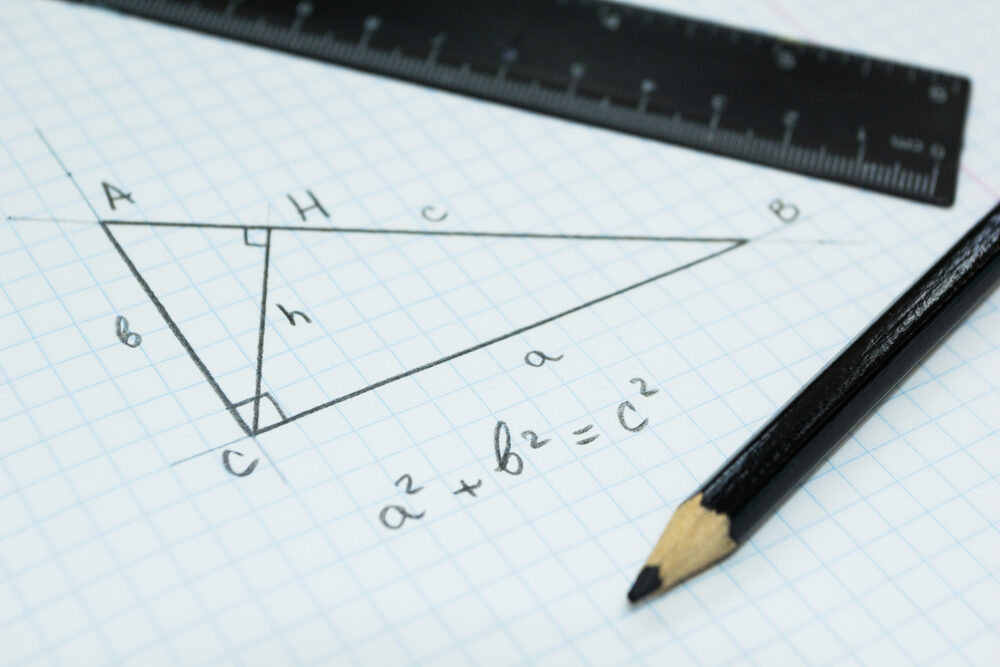
The students who find grade 9 hardest are often not the ones you would predict. A child who struggled through middle school arrives expecting difficulty and has usually built some strategies for it. The student who sailed through on ability, never really having to study, meets the first work that does not yield to being clever and has nothing to fall back on.
Here is what actually changes, and what is worth doing before it does.
Grades start counting permanently
The mechanical change, and the one students most consistently underestimate. Grade 9 marks enter the transcript and the cumulative GPA, and they stay there. A freshman year treated as a settling-in period is very often the difference between a 3.2 and a 3.7 at graduation — a gap that no amount of senior-year effort closes, because the averaging works against it.
It is worth saying this to a fourteen-year-old directly and without drama. Most of them have simply never been told.
The maths placement decides more than the year
This is the part families most often discover too late.
Where a student enters the North Carolina sequence — whether they take NC Math 1 in grade 8 or in grade 9 — determines what is reachable by grade 12. Finishing NC Math 3 in grade 11 leaves room for Precalculus and then AP Calculus or AP Statistics. Finishing it in grade 12 does not. That is a four-year consequence set by a placement decision usually made quietly, on the basis of grade 7 and 8 performance, before anyone in the family is thinking about senior year.
It is not irreversible — students do move between pathways — but the window is narrow and it closes early. If your child is in grade 7 or 8 now, the single most useful question you can ask the school this term is: where does my child's current maths placement lead by grade 12, and what would it take to change it?
NC Math 1 is a change of kind, not degree
Students arrive from grade 8 expecting more of the same and meet something structurally different. NC Math 1 holds algebra, functions, statistics and geometry in one course, and it asks students to treat a variable as something that varies rather than as a box with a number hidden in it.
That shift — from arithmetic with letters to genuine abstraction — is where a lot of previously comfortable students hit their first real wall. It is normal, it is not a sign that a student is bad at maths, and it responds well to being addressed directly rather than waited out.
NC Math 1 also carries an end-of-course exam that counts toward the final grade; state rules set that at a minimum of 20 per cent. For many students it is the first assessment where a term of solid coursework cannot carry a weak exam.
Nobody chases you any more
Middle school is built with a safety net: shorter deadlines, more reminders, teachers who notice within days that something is missing. High school progressively removes it. Longer assignments, fewer check-ins, and the expectation that a student notices their own gaps and asks.
For a student whose organisation was effectively being run by adults, this is the term it shows. It usually looks like a capable child suddenly producing poor work, which families reasonably mistake for a content problem.
Studying becomes a skill that has to exist
Plenty of students reach grade 9 having never studied, because they never needed to. Their revision method is rereading notes, which produces familiarity and almost no recall.
The replacement is retrieval — closing the book and attempting to produce the material, then checking. It is less pleasant and considerably more effective. A student who learns this in grade 9 has an advantage that compounds for four years.
What to do in the summer before
Not a full prep course. Three things, none of them heavy:
- Close any maths gap you already know about. Fractions, ratios, negative numbers, solving for an unknown. These are the foundations NC Math 1 assumes, and summer is the last unhurried chance to fix them.
- Confirm the placement. Ask where the pathway leads. Ask in spring, not August.
- Practise one thing being hard. Anything — an instrument, a sport, a project — where the student stays with difficulty for weeks and finishes. The transferable part is the tolerance, not the subject.
And in the first term
Watch the gap between effort and result. A student working hard for mediocre marks usually has a method problem, not an ability problem, and method problems are quick to fix once named. A student with good marks and little effort is often fine and is sometimes building nothing — that one is worth watching into grade 10.
Act in the first term rather than the second. Grade 9 autumn is the cheapest moment in high school to fix something; by grade 11 the same gap is competing with EOC exams, AP courses and the SAT for the same weeks.
Where we fit
We teach the North Carolina sequence from middle school through NC Math 4, Precalculus and AP, which means a student moving from grade 8 into NC Math 1 with us does not change teacher, method or expectations at exactly the moment everything else is changing.
Our Apex centre at 2701 Lawnview Lane, Suite 106 serves most of our Apex and Holly Springs families, and the autumn timetable there fills earliest. If you want a second opinion on a grade 8 maths placement before committing to it, that conversation is free and it is one of the more consequential ones a family can have.
Ready to get started?
Book a free trial class or a diagnostic and we'll build a personalized plan.
Book a free trial